
Emergency guide for yachtsmen

An emergency at sea is a serious situation that requires quick and considered action - especially if you are travelling without a professional crew or even alone. Whether you are travelling with friends, family or as a single-handed sailor, anyone in charge of a yacht bears responsibility and should be well prepared for possible incidents. The most important principle is always: keep calm and proceed in a structured manner.
Safety on board begins even before setting sail. If you are travelling alone or with a less experienced crew, you should ensure that all important equipment is easily accessible and in working order. This includes life jackets, an emergency radio beacon (EPIRB), signalling rockets, fire extinguishers, a fire blanket and a first aid kit. A VHF radio with DSC emergency call function or a satellite phone is also indispensable on longer trips. Even without a traditional crew, it is worth regularly going through where equipment is located and how it is used in an emergency. If an emergency occurs, the situation must be assessed as quickly as possible: Are there any casualties? Is there acute danger from fire, water or collision? Is the yacht in danger of sinking? As soon as this is clear, an emergency call should be made immediately - ideally via VHF channel 16 or a DSC emergency call. It is important to transmit your own position (preferably via GPS), the type of emergency, the number of people on board and the condition of the boat as accurately as possible. As soon as possible, everyone on board should put on a lifejacket - even in supposedly harmless situations. If you are travelling alone, you must pay particular attention to ensuring your own freedom of movement while carrying out important manoeuvres. The rule of thumb continues to be: only abandon ship if it is on fire or sinking. In the event of a fire, act quickly: use fire extinguishers, work against the wind, switch off electrical systems immediately and, if possible, prevent smoke or flames from spreading. In the event of water ingress, the cause should be localised as quickly as possible and tackled with bilge pumps, buckets or makeshift waterproofing. You can also achieve a great deal on your own with a clever approach. If the yacht is unable to manoeuvre, drift anchors, emergency sails or a temporary anchor can help to stabilise the situation. It is important to manoeuvre the boat so that it is not at right angles to the wave. In some cases, controlled drifting may even be the safest option. Especially when travelling without a crew, it is crucial to stay calm. Panic is the biggest enemy in any emergency. Therefore: prioritise tasks, work step by step, don’t rush. If you practise regularly or think about possible scenarios, you can act more calmly and purposefully in an emergency. Good preparation includes regular checks of safety equipment, practising emergency call procedures (e.g. using a "test call"), refreshing first aid skills and repeating important manoeuvres - such as what to do in the event of "man overboard". Many of these exercises can even be realistically simulated on their own.
To summarise: safety at sea starts long before you cast off. If you are prepared - whether as a solo sailor or with a crew - you will act more clearly, safely and confidently in an emergency. This makes it easier to deal with critical situations and prevents a potential crisis from turning into a disaster.


A 20-year-old man has died after a tender exploded while being cleaned at Yalıkavak Marina in Bodrum, Türkiye.
Read more Young Crew Member Dies After Tender Explosion at Yalıkavak Marina
Following the mystery surrounding two cruisers found dead aboard a yacht in the Mozambique Channel, this remote waterway has drawn renewed attention from the global yachting community.
Read more Mozambique Channel: A Remote Passage Under the Spotlight
A tragic accident at Lake Perris showed the danger of not wearing life jackets, as a father died while keeping his 7-year-old son safe after their kayak flipped.
Read more Father Dies Saving Son in Lake Perris Kayaking Tragedy
The recent rescue of two men missing off the NSW Northern Rivers region in Australia serves as a timely reminder of the importance of carrying a registered distress beacon when venturing out to sea. These life-saving devices can transmit your exact location to emergency services in case of trouble, allowing rescuers to act quickly.
Read more Two Men Rescued Off NSW After Activating Emergency Beacon
Good to realize there’s a fish farm nearby—these areas aren’t ideal for swimming due to water quality, and getting too close can damage your boat or their equipment. Spotting the signs early helps you steer clear and stay safe.
Read more How to Tell If There’s a Fish Farm Nearby While Sailing in the Med
When most people think of a microwave on a boat, they picture reheating coffee or popping popcorn. But seasoned boaters know that, in the face of a lightning storm, it can help protect your electronics—and potentially save your voyage.
Read more The Surprising Second Use of Microwave on Boats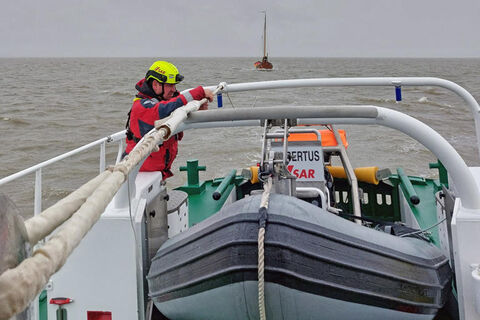
Crew in mortal danger in the North Sea - sea rescuers had to set sail! On Thursday, March 28, a four-man crew of a flat-bottomed vessel came into danger - they sailed directly into a sudden storm front! The rough and cold North Sea - this is what a four-man boat crew experienced off Norderney.
Read more Crew of a flat-bottomed vessel in distress in the North Sea - sea rescuers had to set sail
Today, October 5, we received the message that the Jambo is sinking and Martin is in the life raft. A freighter is on its way and will reach him in about 20 hours.
Read more The Jambo is sinking - Martin is in the life raft waiting for rescue